
Gender Equality
Indigenous Peoples and Gender Equality
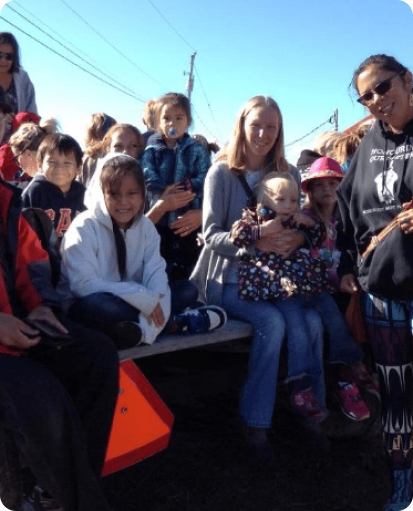
Indigenous women, girls, and 2SLGBTQI+ people play vital roles in shaping communities across Canada and beyond, contributing their knowledge, leadership, and creativity to every aspect of society. Their efforts strengthen families, preserve cultures, and advance social and environmental justice, helping to build a more inclusive and equitable world.
However, despite their resilience and achievements, they continue to face distinct and interrelated challenges rooted in colonial history and ongoing systemic barriers. Inequities in access to education, employment, health care, and political representation persist, limiting opportunities for full participation and recognition. Many also experience higher rates of violence and discrimination, compounded by the intersecting impacts of gender, Indigeneity, and sexual orientation or identity.
Recognizing these realities is essential to achieving true equality. Supporting Indigenous women, girls, and 2SLGBTQI+ peoples means addressing historical injustices, removing structural barriers, and ensuring their voices lead the path toward reconciliation, empowerment, and shared prosperity.
Contact us today and learn more how we can help
Indigenous women, girls, and 2SLGBTQI+ people strengthen society but face barriers to equality in all life areas.
Advancing Reconciliation & Gender Equality
Indigenous women, girls, and 2SLGBTQI+ people are vital to Canada’s social, economic, and cultural life but continue to face systemic barriers in education, employment, health, and political participation. Women and Gender Equality Canada (WAGE) works to advance both gender equality and reconciliation by supporting Indigenous-led solutions and addressing these inequities.
The department’s work focuses on policy-making and funding. Through the Indigenous Women’s Circle—a group of Indigenous women and 2 Spirits leaders established in 2018—WAGE gathers guidance on ending gender-based violence, promoting leadership, and reducing economic insecurity. This collaboration ensures Indigenous voices shape federal programs and policies.
WAGE’s efforts align with the United Nations Declaration on the Rights of Indigenous Peoples Act (UNDA) Action Plan, particularly measures promoting gender-based violence prevention and 2SLGBTQI+ resilience. The department also funds Indigenous-specific and Indigenous-led projects that strengthen community capacity and equality outcomes.
Overall, Canada’s approach combines Indigenous leadership, intersectional policy, and targeted funding to advance equality and reconciliation for Indigenous women, girls, and 2SLGBTQI+ people.
Ending Gender-Based Violence against Indigenous Peoples
Indigenous women, girls, and 2SLGBTQI+ people face significantly higher risks of gender-based violence (GBV) in Canada. For instance, although Indigenous women make up about 5 % of all women in Canada, they accounted for about 26 % of all female intimate-partner homicide victims in 2022. Canada.ca Statistics show 17 % of Indigenous women have experienced intimate-partner violence, while 43 % report sexual assault since age 15—versus around 30 % for non-Indigenous women.
To address this, WAGE leads a whole-of-government approach. Key initiatives include the Federal Strategy: It’s Time: Canada’s Strategy to Prevent and Address Gender-based Violence (2017) and the National Action Plan to End Gender-based Violence (2022). Pillar 4 of the Action Plan emphasizes Indigenous-led approaches and links with the national effort to address Missing and Murdered Indigenous Women, Girls and 2SLGBTQQIA+ People.
Since 2015, WAGE has invested over CA$235 million in more than 540 projects addressing GBV in Indigenous communities. Canada.ca Additional funds support human-trafficking prevention and 2SLGBTQI+ anti-hate initiatives. Resources like the 24/7 Hope for Wellness Helpline offer immediate support for Indigenous survivors.
Overall, Canada’s approach aims to prevent GBV through culturally grounded, Indigenous-led programming, collaboration across governments, and targeted investment to strengthen safety, healing, and community resilience.

Indigenous Women's Circle
The Indigenous Women’s Circle convenes Indigenous women leaders and subject-matter experts from public and private sectors to discuss gender-equality priorities and challenges faced by Indigenous women, girls and 2SLGBTQI+ people in Canada.
Membership includes distinguished figures from Inuit, Métis and First Nations communities, each bringing lived experience and leadership in areas such as violence prevention, economic empowerment, governance, youth advocacy and cultural revitalization.
The Circle plays an advisory role: it informs federal policy-making and programming within WAGE by offering Indigenous-led perspectives and ensuring relevant voices guide the development of gender-equality initiatives.
By centring Indigenous leadership, the Circle fosters culturally rooted approaches to advancing equity. This includes promoting safety, healing, economic participation, cultural resilience and political representation. The page lists current members and describes their diverse contributions—from mentoring youth and survivors, to advocating on national and international stages.
Overall, the Indigenous Women’s Circle is a key mechanism for ensuring that Indigenous women-led expertise shapes Canada’s efforts on gender equality and reconciliation.
